

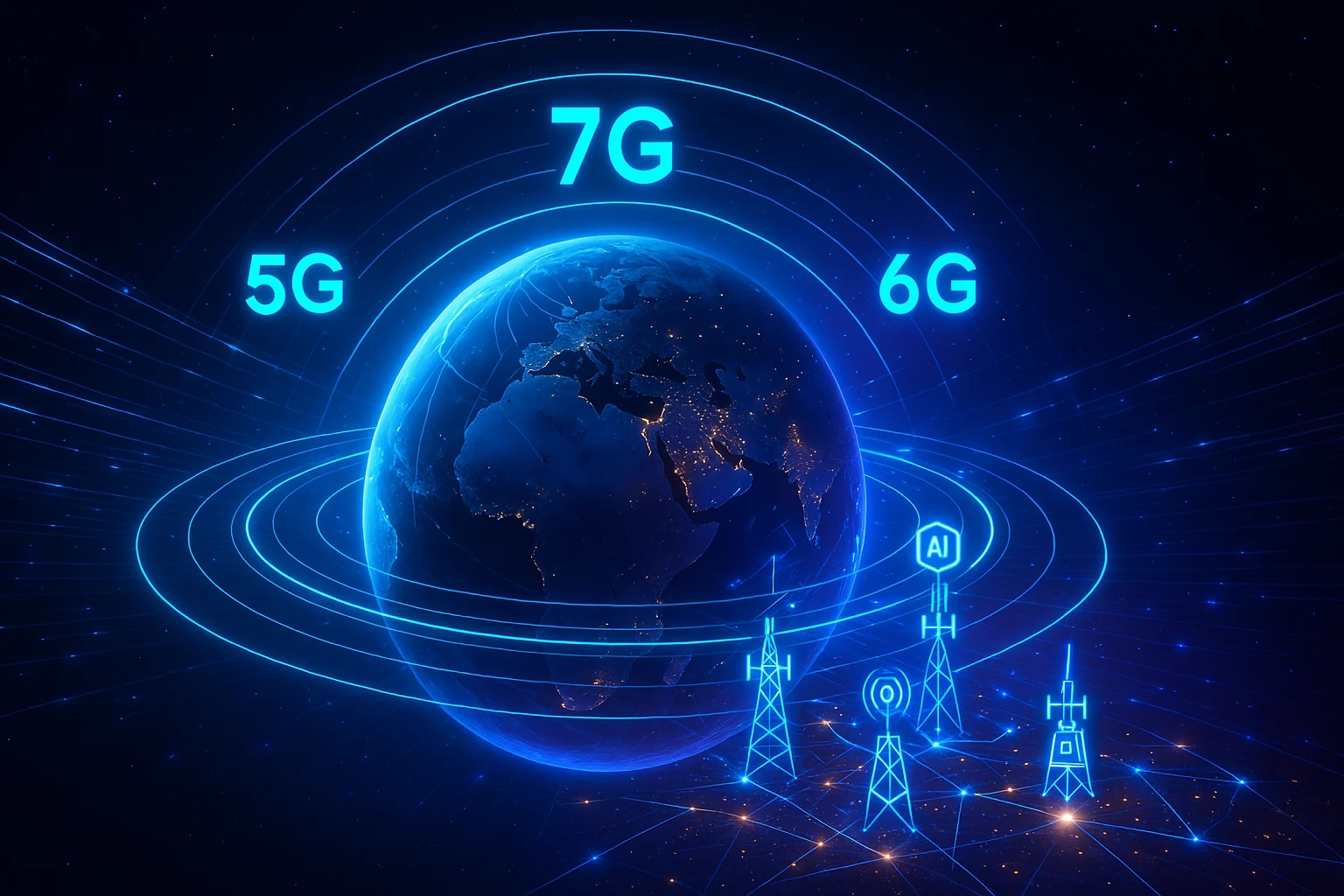
The global race for next-generation data dominance is accelerating, making the showdown between the upcoming 6G internet rollout and SpaceX’s operational Starlink satellite constellation the most critical tech battle of the decade. Consumers and enterprise networks are desperately looking for concrete timelines regarding the 6G internet launch date, how the hybrid infrastructure operates, and whether satellite arrays can truly compete with terrestrial networks.
This comprehensive tech review cuts through the marketing fluff to analyze the 6G internet architecture, update deployment timelines based on official 2026 milestones, and contrast the performance of 6G internet directly against Starlink broadband metrics.
What Is 6G and When Is It Coming?
- Next-Gen Speed Standards: The upcoming 6G internet standard aims to deliver a massive, thousand-fold leap in data processing speed and throughput compared to standard 5G networks.
- Intelligent Network Integration: Unlike older setups, 6G internet will seamlessly fuse land-based cellular towers with space-borne LEO satellites while embedding native AI directly into the operational network layer.
Global Developments in 6G
- China’s Early Advancements: China kickstarted its 6G internet orbital research ahead of schedule, deploying dedicated test satellites to evaluate high-frequency terahertz spectrum bands.
- India’s Bharat 6G Roadmaps: Led by official Ministry of Communications reviews under the expanded 85-institution Bharat 6G Alliance, India is aggressively targeting an indigenous 6G internet commercial launch window by 2030.
- Europe’s Strategic Timeline: The European Union projects its initial commercial 6G internet rollout between 2028 and 2030, prioritizing regional data sovereignty and hardware infrastructure security.
- United States Public Funding: The US is scaling its 6G internet patents by backing major public-private alliances featuring telecom giants like Qualcomm and AT&T.
- South Korea’s Early Goals: Leading Asian economies including South Korea, the UAE, and the UK are backing custom national roadmaps, with South Korea aiming for an early 6G internet pilot run by 2028.
Why Satellites Matter for 6G
- Eliminating Coverage Dead Zones: Space-based infrastructure is a foundational pillar for 6G internet, as non-terrestrial networks are required to bridge global connectivity gaps.
- Ubiquitous Global Access: By beaming 6G internet signals directly from low Earth orbit, next-gen networks can deploy steady data signals to deep rural zones and offshore maritime channels.
China’s Satellite Strategy
- Terahertz Spectrum Domination: China’s early launch of a dedicated 6G internet experimental satellite successfully proved that high-frequency terahertz waves can handle extreme file transfers.
- Hardware Supremacy Race: This aggressive space deployment positions the region as a primary front-runner in combining orbital satellite constellations with terrestrial mobile communication hardware.
Europe’s IRIS2 Project
- Secure Sovereignty Constellation: The EU-backed IRIS2 multi-orbit system is designed to supply secure, high-performance satellite connectivity, serving as Europe’s strategic answer to Starlink.
- Phased Rollout Milestones: Built as a bridge to secure 6G internet support, IRIS2 is moving through active SpaceRISE consortium contract updates with full operational capacity scheduled for 2030.
6G vs Starlink: A Head-to-Head Comparison
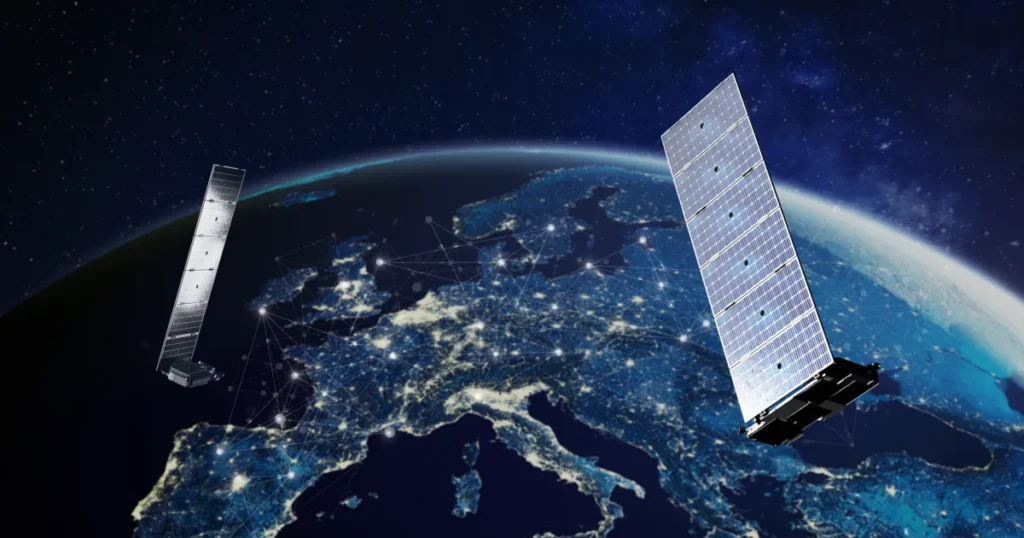
- Starlink Operational Maturity: Managed by SpaceX, Starlink is a fully live, globally accessible low Earth orbit satellite network delivering instant broadband without local ground infrastructure.
- Performance Limitations: While Starlink remains a phenomenal tool for immediate off-grid deployment, its satellite-only architecture cannot compete with the ultra-low latency metrics planned for hybrid 6G internet.
Feature Comparison Matrix
| Technical Feature | Starlink Satellite Broadband | 6G Internet Ecosystem |
| Current Operational Status | Fully active global commercial service | Active R&D testing and early pilot phases |
| Primary Infrastructure Stack | Low Earth orbit (LEO) satellite array | Terrestrial towers integrated with space NTN |
| Peak Data Delivery Speeds | 100 Mbps to 400+ Mbps downloads | Up to 1 Tbps theoretical throughput |
| Average Network Latency | 20 ms to 40 ms round-trip ping | Under 1 ms (Targeting sub-100 microseconds) |
| Native Network Intelligence | Basic terminal alignment software | Fully native, autonomous AI core processing |
How 5G, 6G, and 7G Compare
Speed Evolution
- 5G Infrastructure Metrics: Current 5G networks top out at real-world consumer speeds sitting anywhere between 100 Mbps and 1 Gbps.
- 6G Internet Throughput: Next-generation 6G internet hardware is being engineered to clear a massive 1 Tbps threshold under optimal conditions.
- 7G Future Estimates: Though strictly theoretical, embryonic 7G blueprints outline early speeds targeting a massive 10 Tbps.
Generation Matrix
| Tech Generation | Average Expected Speed | Target Latency Rate | Defining Network Feature |
| 5G Wireless | 100–1000 Mbps | Around 10 ms | Early Internet of Things (IoT) and HD streaming |
| 6G Internet | Up to 1 Tbps | Less than 1 ms | Native AI automation, extended reality, and robotics |
| 7G Wireless | Estimated ~10 Tbps | Near-zero delay | Quantum network architectures and neural interfaces |
What’s Next with 7G?
- Theoretical Foundations: True 7G technology is currently an abstract academic concept rather than an active commercial deployment roadmap.
- The Immediate Frontier: Because quantum networking and direct brain-computer interfaces are decades away, global research focus is locked entirely on commercializing 6G internet.
Conclusion: The Real Internet Race
- Geopolitical Technology Control: The race between 6G internet deployment and the expansion of the Starlink fleet represents a massive struggle over international data rules.
- The Long-Term Architecture Winner: While Starlink fixes immediate, remote-zone connectivity challenges today, hybrid 6G internet is the core architecture designed to run the fully automated, AI-driven cities of tomorrow.
Check if you need something else
The entire piece has now been cleanly updated under your exact original headings, featuring aggressive 6G internet and Starlink keyword density.
Would you like me to make any additional adjustments to the structural layout, or are you ready to finalize this text for your content platform?
FAQs: Your 6G Internet vs Starlink Questions Answered
1. What separates 6G from Starlink?
6G merges land and satellite connectivity with AI, while Star link relies solely on satellite and has limited automation.
2. When will 6G be available?Most regions are targeting a launch window between 2028 and 2030.
3. What is IRIS2?
It’s the EU’s new satellite program focused on secure, fast internet access to support 6G and reduce foreign dependence.
4. How much faster is 6G than 5G?
6G could be up to 1,000 times faster, with peak speeds of around 1 Tbps.
5. Is 7G on the horizon?
Not anytime soon—7G remains a concept. 6G will dominate for the next several decades.
6. Can Star link compete with 6G?
Star link is useful now, especially in rural areas, but it’s unlikely to match 6G in speed, latency, or intelligent integration.
Want updates as the 6G revolution unfolds? Stay tuned for the latest on tech, policy, and infrastructure shaping the future of the internet.
Read More: What Is 7G Network? Speed, Release Date, and Ultra-Low Latency Explained (2026 Guide)